How to create a wellbeing team | Alpine Health
Skip to content Skip to navigation

How to create a Wellbeing Team

Wellbeing teams can help create an inclusive and supportive structure for all members within a club/group/organisation. These teams focus on promoting the emotional wellbeing and mental health of all its members.

Supporting wellbeing does not just help the individual, but has benefits to the organisation. Wellbeing is strongly linked to productivity, and a positive, safe and inclusive culture increases the chance of keeping members engaged and feeling valued.
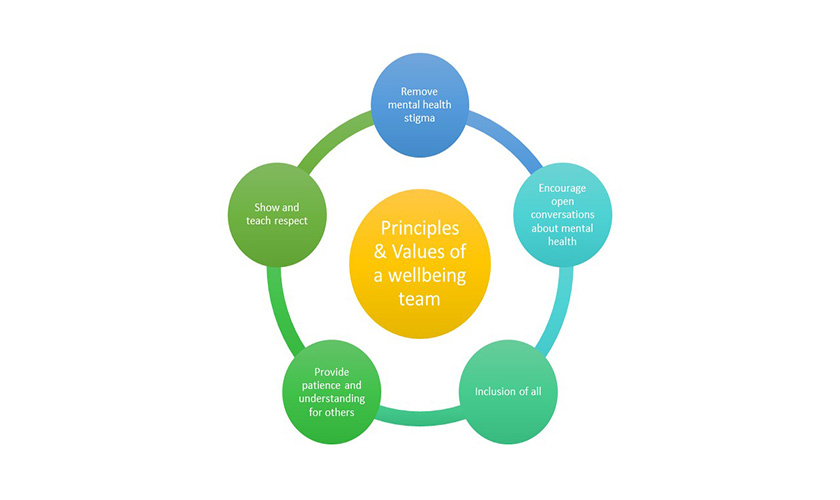
principle of wellbeing

You might think about setting up a wellbeing team if you are looking at:

  • Building a network and inclusive culture that maintains and supports wellbeing.
  • Providing meaningful support to members experiencing mental health or emotional challenges.
  • Encouraging open and respectful conversations around mental health.
  • Responding to recent stress, change or trauma experienced by your organisation/club/group.

Creating a Wellbeing Team doesn't start with a perfect plan...it starts with small, intentional steps. That might mean having a conversation with a supportive person, bringing up ‘wellbeing’ at your next team meeting, or jotting down a few ideas. Go at a pace that feels right for your situation and trust that smalls steps can lead to meaningful change. 

Below are some steps to help, but the process is flexible and may not be linear. Use below what is useful rather than feeling like you have to go through it step-by-step. If you are a sporting club, you may also find this document helpful -  Sporting clubs.

You are not alone—others have walked this path! Reach out to groups that have already created wellbeing teams. Sharing ideas and experiences can reduce the workload and build a sense of community around this work. For example, the Myrtleford Football and Netball Club and the Bright and Surrounds Mental Wellbeing Committee have generously contributed to this guide and may be valuable contacts. The Bright and surrounds mental wellbeing committee started in October 2024 and meets regularly. It is a great platform for sharing resources and delivering activities together.

There is no ‘i’ in team, but your team could start off as small as 2 people and grow over time. Members of your team will likely change in size and people as time goes on, however it is important to have some initial drivers so that work can start. Prioritise creating a team that values inclusion, lived experience, and diverse perspectives. Work with those who are passionate about wellbeing and have a shared interest. Commit the time to meet with the team so that you can bring your ideas to life and make plans. People may join or step back from the team as it evolves; this is a natural process.

For a wellbeing team to be successful, it needs the support of leadership. Depending on your structure, you may start with leadership buy-in, or you may build a small team first to help show the value. Use the “What is a wellbeing team?” section to help communicate your vision to leadership. You might also like to make a start on a Terms of Reference (see Develop a Terms of Reference below) before approaching leadership. Provide regular updates to leadership about the activities of the wellbeing team to keep them engaged and supportive.

A Terms of Reference helps clarify your team’s purpose and direction. It outlines shared goals, responsibilities and values guiding your work. The SMART framework can be a helpful tool when creating your goals.


See the template below for suggestions for your Terms of Reference.

Once your goals are clear, you can plan how to move towards them. Developing an action plan will guide your team in delivering tasks.

Click to download a Template Action Plan.

It is important to decide on a timeframe for your action plan and set one that makes the most sense for your organisation, but that is also realistic for where your team is at. Your plan does not have to be perfect. Keep it flexible enough to adapt as you learn or as your team changes. Allow for diverse working styles. Some members may prefer structured roles, others may contribute more fluidly. The work involved in setting up a team will be resource-heavy, but as the team gets established, resourcing should become more stable.

Policies and procedures can be an effective way to support culture where wellbeing and mental health is valued. Consider starting with a wellbeing policy and code of conduct.

These documents should emphasise safety, inclusion, and respect for all members.

Click to download a template for a Wellbeing Policy.

You can visit https://www.playbytherules.net.au/templates to find templates for the following:

  • Code of Conduct - for coaches, spectators, committees, parents, players and team managers
  • Diversity, Equity and Inclusion Policy
  • Complaints Handlers
  • Team Selection Policies


Other policies and procedures you should consider include:

  • Member Protection Policy
  • Discrimination, Bullying and Harassment Procedure
  • Alcohol and Other Drug Policy
  • Social Media and Communications Policy and Procedure
  • Interacting with Children

Creating lasting change means planning for long-term support, learning, and resourcing. This includes building the capacity of your wellbeing champions and all members of your club/group/organisation, planning for regular communications amongst your members and community, and securing funding for ongoing wellbeing projects.

Other considerations

In order for organisations to be equipped with the skills to support wellbeing, you will need a budget for training and capacity building supports. There are a range of mental health training options which you

may consider for your members. Provide opportunities for learning while considering the different needs or desires when it comes to training and capacity building. Respect diverse lived experiences and knowledge. A list of training courses and organisations can be found here

Wellbeing leaders may need support themselves, especially if they are navigating vicarious trauma or personal challenges. Consider offering access to reflective practice, peer supervision, or external supports. You might like to consider a budget for a Member Assistance Program and/or make them aware of where else they can go for information and support.

Some examples of helpful organisations include Beyond BlueLifeline and Black Dog Institute.

You can also click here for a list of mental health services/support. Mental Health First Aid Australia has also launched a resource hub to support mental health first aiders - MHF Aider Resource Hub | Mental Health First Aid Australia.

In order to ensure a positive wellbeing culture, it’s important that your communication, internally and externally, reflects inclusive and consistent messages. There are a range of organisations that you can draw on for positive messaging - see here. Your organisation may also want to consider:

  • Unique branding and taglines.  
  • Participating in events and campaigns which have a mental health focus eg. RUOK? Day
  • Considering your own wellbeing activities. See what Myrtleford Football & Netball Club do on an annual basis. 
  • Incorporating wellbeing into your already existing activities. See what Bright Uniting Church already offer to community and aligns well with supporting wellbeing.
  • Education about mental health in an effort to reduce stigma.
  • Promoting wellbeing activities that are sensory-friendly and accessible.

Explore grants, sponsorship, or community partnerships to support your team’s activities. Having a budget helps build consistent support without over-reliance on unpaid or emotional labour. Ongoing funding for wellbeing activities is something worth exploring as part of sustaining the work of the wellbeing team.

For more information


Back to top